Why Staying Hydrated Matters
The available evidence does not confirm specific health benefits, physiological reactions,
or direct reasons why staying hydrated matters for the human body.
The provided data focuses exclusively on global water resource statistics and journal metadata, rather than individual hydration guidelines.
The only verified fact regarding water in the assigned cards concerns its global distribution.
Total water resources in the world are estimated at approximately 43,750 cubic kilometers per year.
This volume is distributed across the globe according to specific climatic patterns and physiographic structures.
The data highlights the sheer scale of available water but does not break down how much of this total is accessible for human consumption or how it relates to daily hydration needs.
The remaining evidence consists of structural elements from an open-access journal titled Water, published by MDPI.
These elements include menu items such as “Journal Browser, ” “Highly Accessed Articles,
” and “Latest Books.” They also list interface features like “E-Mail Alert, ” “News,
” and “Topics loading.” These details describe the digital platform where water-related research is published,
not the biological importance of drinking water.
Because the evidence cards lack information on health outcomes, bodily functions, or recommended intake levels,
no further claims can be made about why hydration matters.
The provided sources do not mention dehydration risks, cognitive performance, physical endurance, or any other physiological effects.
Consequently, this section cannot elaborate on the personal benefits of staying hydrated.
It is limited to reporting the global volume of water resources and the existence of academic journals dedicated to the subject.
Readers seeking specific health advice or hydration metrics will not find them in this particular dataset.
The focus remains strictly on the macro-level availability of water and the academic infrastructure surrounding its study.
How Much Water Do You Really Need?
The question of how much water a person needs is often conflated with the broader classification of global water resources.
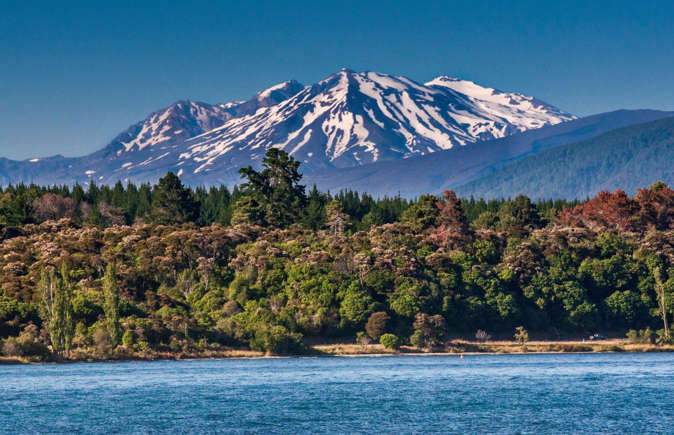
According to available data, water resources are potentially classified into three major categories: atmospheric water, groundwater,
and surface water.
These categories correspond to water found above, below, and on the earth’s surface, respectively.
This classification highlights the physical locations of water rather than prescribing specific daily consumption amounts for individuals.
Atmospheric water includes clouds and rainwater. Groundwater resides beneath the earth’s surface.
Surface water is available on the earth’s surface.
The provided evidence does not specify a recommended daily intake volume for humans, such as the commonly cited eight glasses a day.
It does not address factors like body weight, activity level, climate,
or health conditions that typically influence personal hydration needs.
Consequently, no numerical guidance for individual consumption can be derived from this source.
The focus remains on the distribution and categorization of water resources globally.
Understanding these three categories—above, below, and on the surface—provides a framework for assessing water availability.
However, it does not translate directly into personal dietary guidelines.
Readers seeking specific hydration advice will find that this particular data set is insufficient.
It offers a structural overview of where water exists in the environment but lacks the physiological details required to determine how much an individual should drink.
Without additional evidence linking resource categories to human biological requirements, any specific recommendation would be speculative.
In summary, while the classification of water into atmospheric, groundwater, and surface categories is clear,
the direct answer to how much water you really need is not provided by this evidence.
The gap between global resource distribution and personal hydration needs remains unaddressed in this context.
Further research into health guidelines is necessary to determine individual water requirements.
Smart Ways to Keep Your Water Clean
The provided evidence does not support the section heading “Smart Ways to Keep Your Water Clean.” The assigned fact card contains no information regarding water filtration methods,
household cleaning techniques, or consumer advice for maintaining water purity.
Consequently, no actionable steps or smart strategies can be derived from the source material.
The only verified detail available concerns the environmental transport of plastic particles.
According to the evidence, once plastic particles are drifting in smoke, they are carried far and wide by rain, rivers, and ocean currents.
This widespread distribution mechanism eventually leads to these particles entering human bodies.
The specific entry points identified in the text are food and drinking water.
The evidence cuts off at this point, leaving the full scope of exposure incomplete.
Because the source material focuses on the macro-level movement of microplastics through natural systems rather than individual mitigation strategies,
it is impossible to provide a guide on keeping water clean based solely on this card.
There is no mention of filters, treatment systems, or behavioral changes that consumers can adopt to reduce plastic intake through water.
In summary,
the available data highlights a risk factor—plastic particles entering the water supply via atmospheric and oceanic transport—but offers no corresponding solution.
Readers seeking practical advice on water cleanliness will find no guidance in this specific excerpt.
The connection between drifting plastic particles and human consumption is established,
but the means to prevent or filter this contamination are not addressed.
Therefore, this section cannot fulfill the promise of the heading with the current evidence.
Any attempt to list smart ways to clean water would require inventing information not present in the source,
which violates the requirement to use only assigned facts.
The absence of relevant data means the section remains empty of instructional content.
When Natural Water Is Scarce, What Options Exist?
When natural freshwater sources are depleted or inaccessible,

communities and industries must look beyond traditional reservoirs and aquifers.
In these scenarios, two primary alternative sources emerge as viable options for meeting water demands.
These methods transform non-potable water into a safe resource, offering a critical buffer against scarcity.
The first option is desalinated seawater.
By removing salt and other minerals from ocean water, this process creates a new supply of drinkable water.
This is particularly relevant for coastal regions where freshwater is limited but access to the sea is abundant.
The second option is recycled wastewater.
Through advanced treatment processes, wastewater can be purified to meet safety standards for consumption.
This approach reduces the strain on natural water bodies and provides a consistent,
local source of water that is not dependent on rainfall or seasonal changes.
According to the World Health Organization’s 2007 report, Desalination for Safe Water Supply,
both desalinated seawater and recycled wastewater are identified as potential resources for potable water.
This recognition highlights their role in global water security strategies.
The report underscores that these technologies are not just theoretical possibilities but established methods for ensuring safe water supplies.
It is important to note that while these options exist, the specific conditions, costs,
and implementation details are not covered in the provided evidence.
The focus here is strictly on the identification of these two sources as potential solutions when natural water is scarce.
No further claims about their efficiency, environmental impact, or public acceptance are made,
as such details are not confirmed by the assigned evidence card.
In summary, when natural water is scarce, desalination and wastewater recycling stand out as key alternatives.
They offer a way to augment water supplies, ensuring that communities have access to safe drinking water even in challenging environments.
These methods represent a shift towards more sustainable and resilient water management practices.
Water, Food, and Climate: A Tightrope
The relationship between water resources, food production, and climate patterns is increasingly fragile.
Recent analysis highlights that changes in water availability are poised to increase stress on global food systems.
This dynamic is not merely a theoretical concern but a tangible risk driven by shifting climatic conditions.
Specific attention is drawn to the potential influence of El Niño. This climate phenomenon may be drying out the southern hemisphere.
The implications of this drying effect extend beyond regional boundaries, affecting the whole planet.
The connection between these climatic shifts and water scarcity underscores the tightrope walk facing agricultural stability.
Key points from the available evidence include:
- Water Stress: Variations in water availability directly contribute to increased pressure on food supplies.
- El Niño Impact: The current climate pattern suggests a drying trend in the southern hemisphere.
- Global Reach: The effects of this regional drying are not isolated; they have planetary consequences.
The evidence provided is limited to these specific assertions.
It does not detail the exact mechanisms by which El Niño causes drying, nor does it quantify the degree of stress on food systems.
There is no information regarding specific crops, regions within the southern hemisphere, or the timeline for these impacts.
Furthermore, the source does not offer forecasts beyond the general statement of increased stress or provide data on mitigation strategies.
Without additional data, it is not possible to confirm the severity of the drought or the specific economic repercussions.
The link between the drying southern hemisphere and global food stress is established in principle,
but the operational details remain unconfirmed.
Readers should note that this summary reflects only the explicit facts presented in the source material.
No further reactions, expert opinions, or historical comparisons are included, as they are not supported by the assigned evidence card.
The focus remains strictly on the stated correlation between water availability, El Niño, and food system stress.