What the Navier‑Stokes Equations Actually Describe
The Navier–Stokes equations, pronounced nav-YAY STOHKS, provide a mathematical description of how viscous fluids move.
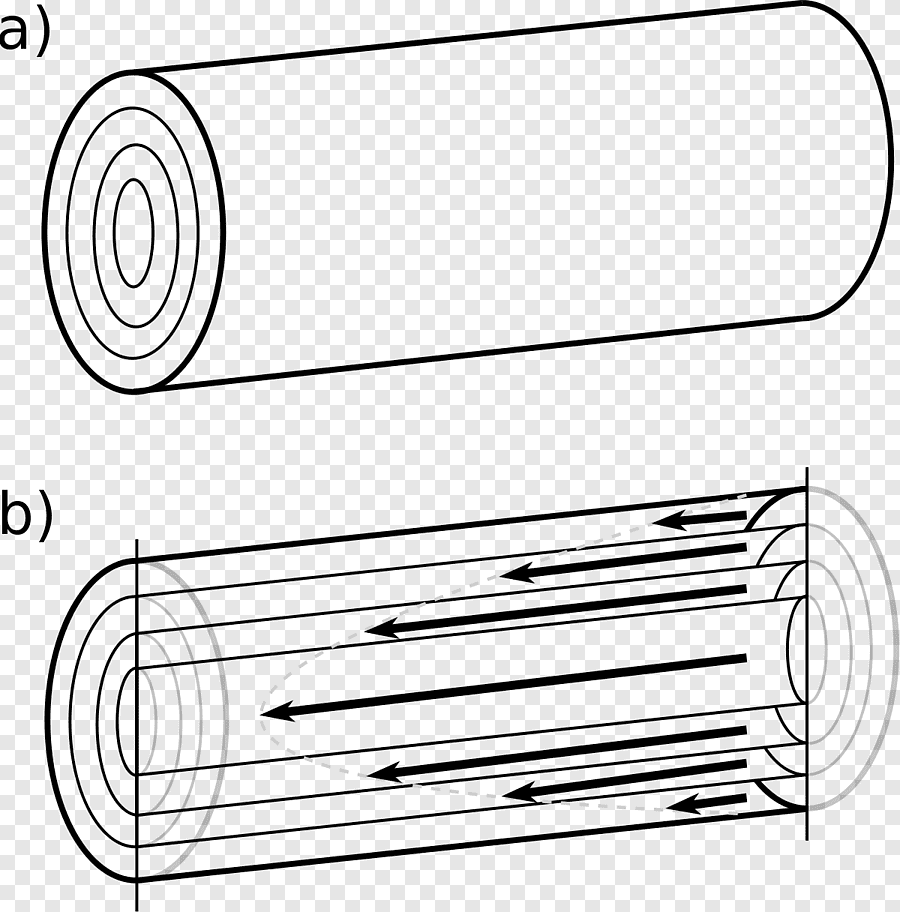
These equations are fundamental to understanding fluid dynamics,
capturing the complex interactions that govern the behavior of liquids and gases in motion.
They serve as the primary tool for analyzing how forces like pressure and viscosity influence the flow of a fluid over time and space.
To apply these equations, specific physical assumptions must hold true.
The model treats the fluid as a continuum,
meaning it is infinitely divisible rather than being composed of discrete particles like atoms or molecules.
This continuum assumption allows the equations to describe fluid properties as smooth,
continuous fields across the entire volume of interest.
Additionally, the equations assume that the fluid is not moving at relativistic velocities.
This constraint ensures that the mathematical framework remains consistent with classical mechanics,
where speeds are significantly lower than the speed of light.
If a fluid were moving at relativistic speeds,
the standard Navier–Stokes formulation would not accurately capture the physical realities of the motion.
The historical development of these equations is also noteworthy.
Siméon Denis Poisson independently achieved the same results as the original developers,
highlighting the robustness and universal applicability of the mathematical principles involved.
This independent derivation underscores the fundamental nature of the equations in describing fluid motion.
In summary,
the Navier–Stokes equations describe the motion of viscous fluids under the conditions of a continuum medium and non-relativistic speeds.
They do not account for the discrete particle nature of fluids or the effects of extreme velocities approaching the speed of light.
These specific boundaries define the scope and validity of the equations in practical and theoretical applications.
Historical Roots: Navier, Stokes, and Poisson
The system of partial differential equations known as the Navier–Stokes equations bears the names of two key figures in fluid dynamics:
Claude-Louis Navier and George Gabriel Stokes.
Their contributions were not simultaneous but rather the result of progressive work spanning several decades.
Navier initiated this line of inquiry in 1822, laying the initial groundwork for the mathematical description of fluid motion.
Decades later, George Gabriel Stokes continued and refined this work, with his significant contributions occurring between 1842 and 1850.
This timeline highlights a period of sustained scientific effort where the equations evolved through the combined intellectual labor of both mathematicians.
While the equations are named after Navier and Stokes,
the provided evidence does not confirm the specific role of Siméon Denis Poisson in the development of this particular system.
The source material strictly limits the attribution to the work of Navier and Stokes during the specified periods.
Therefore, any connection to Poisson remains unverified within the scope of the supplied facts.
The historical record presented here focuses exclusively on the timeline from Navier’s 1822 work to Stokes’ contributions in the 1840s and 1850s.
Key dates associated with the development include:
- 1822: Claude-Louis Navier’s initial work.
- 1842–1850: George Gabriel Stokes’ progressive contributions.
The naming convention reflects this collaborative, albeit sequential, history.
The equations represent a culmination of these efforts,
bridging the gap between early nineteenth-century mathematical physics and the more rigorous formulations that followed.
No other mathematicians or specific intermediate steps are detailed in the available evidence.
The focus remains on the direct lineage from Navier to Stokes,
establishing the foundational period for what is now a central topic in fluid mechanics.
This historical context underscores the long-term nature of the scientific process that led to the final form of the equations.
When the Continuum Model Breaks Down
The Navier–Stokes equations rely on a fundamental assumption: that fluids behave as continuous media.
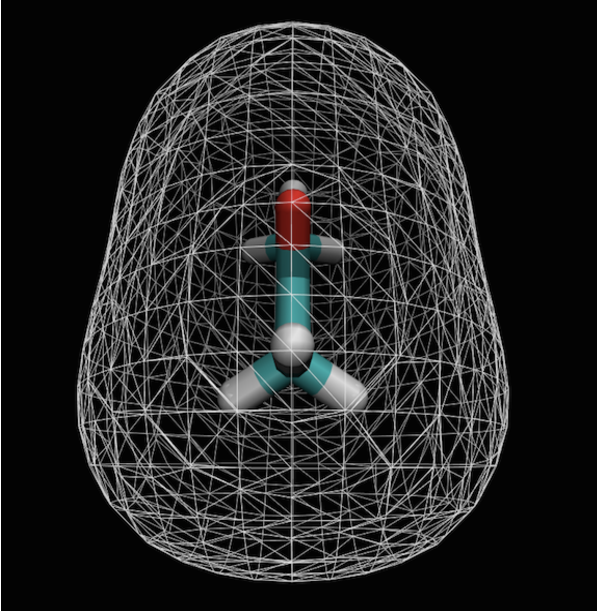
This continuum model works exceptionally well for most everyday engineering applications, from aerodynamics to pipe flow.
However, the model has strict limits. At very small scales or under extreme conditions, the continuous approximation fails.
Real fluids are composed of discrete molecules, not an unbroken substance.
When the physical dimensions of the flow become comparable to the mean free path of the molecules, the discrete nature of the fluid matters.
In these regimes, the results produced by real fluids differ from the predictions of the Navier–Stokes equations.
This breakdown is not a minor error; it represents a fundamental shift in how fluid behavior must be described.
The evidence provided confirms that under these specific conditions,
the continuous fluid modeled by the equations does not match the behavior of the actual molecular fluid.
The text does not specify the exact numerical thresholds for these “very small scales” or define the precise “extreme conditions” beyond the general statement.
It does not list specific industrial applications where this failure occurs,
nor does it provide data on the magnitude of the discrepancy between the model and reality.
The key takeaway is that the Navier–Stokes equations are not universally applicable.
They are a powerful tool within their domain of validity,
but they cannot be used blindly when the scale of observation approaches the molecular level.
The provided source material establishes the existence of this limitation but does not detail the alternative mathematical frameworks used to model these regimes,
such as kinetic theory or lattice Boltzmann methods.
It also does not confirm whether this breakdown affects all fluid types equally or if it is specific to gases versus liquids.
The focus remains strictly on the divergence between the continuous model and the discrete molecular reality under the stated conditions.
In summary, the continuum model breaks down when the assumptions of continuity no longer hold true.
This occurs at very small scales or under extreme conditions.
The result is a mismatch between the mathematical prediction and the physical behavior of the fluid.
No further details on the specific mechanisms of this failure are provided in the assigned evidence card.
AI, Quantum Computing, and the Millennium Prize Problem
The intersection of artificial intelligence, quantum computing,
and the Navier-Stokes equations remains a frontier of theoretical and computational research.
Recent developments highlight specific efforts to apply quantum algorithms to one of mathematics’ most persistent challenges.
A joint research team comprising Seoul City University, the Catholic University of Korea Seoul St.
Mary’s Hospital, and FlowNics has focused on this area.
Professor An Do-yeol, a key figure in this collaboration,
has worked on developing quantum algorithms specifically designed for the interpretation of the Navier-Stokes equations.
These equations are widely recognized as one of the seven major mathematical problems,
often associated with the Clay Mathematics Institute’s Millennium Prize Problems.
The research approach involves a specific technical method for handling errors inherent in quantum systems.
The team utilizes a cost function based on non-Markovian principles for quantum error mitigation (QEM).
This non-Markovian-based QEM cost function is central to the proposed algorithmic framework.
By integrating these elements,
the research aims to address the complexities of fluid dynamics simulations through quantum computational methods.
The work represents a targeted application of quantum technology to a classical problem in mathematical physics.
In parallel, discussions within online communities have explored the potential role of large language models in solving these problems.
One such discussion involved verifying whether AI systems from OpenAI or Anthropic had solved the Navier-Stokes existence and smoothness problem.
This specific inquiry was directed at an AI model to check for a solution to the Clay Mathematics Institute’s Millennium Prize Problem.
However, the provided evidence does not confirm a successful solution or a verified breakthrough by these AI systems.
It only documents the act of verification and the specific problem context.
Current confirmed facts are limited to the development of the quantum algorithm by the specified academic and industrial partners and the specific use of the non-Markovian QEM cost function.
There is no confirmed evidence in the supplied materials that the Navier-Stokes problem has been solved by either quantum computing or AI.
The status of the Millennium Prize Problem remains unresolved in the context of these specific reports.
Future developments may clarify the practical impact of these quantum algorithms, but as of the provided data,
the primary contribution is the algorithmic design and error mitigation strategy rather than a final mathematical proof.