Why the Ground Is Quietly Building Up Stress
Earthquakes capture headlines when they happen, but for years beforehand the fault is quietly accumulating strain.
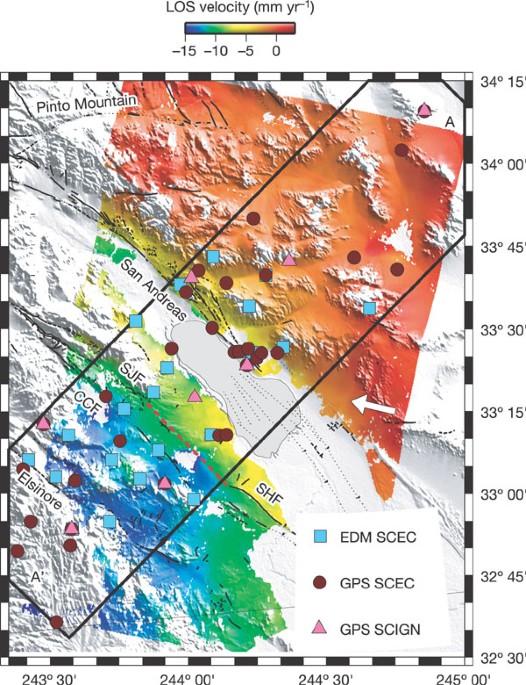
This statement, attributed to Funning, highlights a critical aspect of seismic activity that often goes unnoticed by the general public.
While the sudden rupture of a fault line dominates news cycles, the period leading up to such an event is characterized by a slow,
steady buildup of stress within the Earth’s crust.
Understanding this quiet accumulation is essential for grasping the mechanics behind massive earthquakes.
The provided evidence focuses specifically on the concept of strain accumulation prior to an earthquake.
It does not detail the specific geological mechanisms, such as tectonic plate movement rates or rock deformation processes,
that drive this accumulation.
Nor does it offer numerical data on the duration of this quiet period or the magnitude of stress involved.
The context indicates that this understanding is part of a broader discussion on a new method for predicting where massive earthquakes will strike.
Key points from the evidence include:
- Earthquakes receive significant media attention upon occurrence.
- Faults accumulate strain quietly for years before an event.
- This accumulation is a precursor to the seismic event.
It is important to note that the evidence does not confirm specific timelines for how long this strain accumulates in different regions.
It also does not describe the physical sensations or observable changes in the ground during this quiet phase.
The focus remains strictly on the conceptual framework of strain accumulation as described by Funning.
Without additional data on specific fault lines or historical examples, the description remains general.
The connection to prediction methods suggests that monitoring this quiet phase is a key component of future forecasting efforts,
though the specific techniques are not detailed in this section’s evidence.
The lack of specific metrics or case studies in the provided card limits the depth of analysis possible here.
Readers should understand that while the principle of quiet strain accumulation is established,
the practical application of this knowledge in real-time monitoring requires further technical detail not present in the current evidence.
This section serves to establish the foundational concept that the ground is not static but is actively building up energy in a manner that is invisible to the naked eye until the moment of rupture.
Hotspots for the World’s Biggest Quakes
Certain regions of the globe are responsible for generating the planet’s most powerful seismic events.
These specific areas are the primary sources for earthquakes that exceed a magnitude of 8. 5.
The energy released in these zones is immense, often leading to widespread geological disruption.
The impact of these massive quakes extends far beyond the immediate ground shaking.
In many instances, the seismic activity triggers devastating tsunamis.
These ocean waves can travel across vast distances, causing significant damage to coastal communities far from the epicenter.
The combination of high-magnitude shaking and subsequent tsunami generation makes these hotspots particularly dangerous.
While the exact timing of these events remains a challenge for scientists,
the geographic locations of these high-risk zones are well-documented.
The evidence confirms that these regions consistently produce the largest recorded earthquakes.
The potential for catastrophic consequences is a defining characteristic of these specific tectonic boundaries.
It is important to note that the provided evidence does not specify the exact names of these regions or provide a detailed list of historical events.
The focus remains on the general capability of these zones to produce extreme seismic activity.
No specific forecasts or new predictive methods are detailed in the assigned facts,
only the established reality of their destructive potential.
The key facts established are:
- These regions generate Earth’s largest earthquakes.
- Events in these areas can exceed magnitude 8.5.
- These earthquakes often produce devastating tsunamis.
Beyond these core points, the evidence does not confirm specific recent occurrences, precise geographic coordinates,
or the mechanisms of any new prediction tools.
The description is limited to the known severity and frequency of high-magnitude events in these global hotspots.
What Are Asperities and Why They Matter
Asperities are specific locked regions along a fault line. They function like patches of friction that resist motion.
This resistance continues until enough stress builds up. When that threshold is reached, it can trigger a major earthquake.
The concept is central to a new method designed to predict where massive earthquakes will strike.
By identifying these locked areas, researchers aim to understand the mechanics of large-scale seismic events.
The evidence provided confirms that asperities act as barriers to movement. They hold the fault in place under pressure.
It is important to note what is not confirmed by the current evidence. The specific physical composition of these patches is not detailed.
There is no information on their exact size or depth. The rate at which stress accumulates is also not specified.
Furthermore, the evidence does not describe the immediate physical reactions or secondary effects of the asperities failing.
The primary significance lies in their role as predictors.
Because they resist motion until a critical point, their location and state are key variables in forecasting.
The new method relies on this relationship between friction patches and seismic triggers.
Without these locked regions, the buildup of stress would likely result in smaller, less significant movements.
Instead, the accumulation leads to a major release of energy.
This section focuses strictly on the defined role of asperities as friction patches.
It does not expand on the broader geological context beyond what is necessary to explain their function.
The connection to the prediction method is direct: identifying these regions helps anticipate where the next major event might occur.
The evidence supports the idea that these patches are the critical factor in determining the location of massive earthquakes.
In summary, asperities are locked, high-friction zones. They store stress until it becomes too great.
This stored stress is the precursor to a major earthquake.
The new prediction method utilizes this understanding to target specific locations. No other mechanisms or outcomes are asserted here.
The focus remains on the friction-based resistance and its link to seismic prediction.
Current Weak Points in Our Critical Infrastructure
Earthquakes and their effects are inevitable. They pose an acute threat to communities and systems alike.
While the seismic event itself cannot be prevented, the impact on daily life depends heavily on how well infrastructure holds up.
Currently, significant vulnerabilities exist in critical infrastructure.
The primary concern is the reliability of lifeline services after an earthquake.
These services are essential for maintaining safety and functionality in the immediate aftermath.
When they fail, the consequences can be severe.
The evidence provided does not specify which particular lifelines are most at risk.
It does not list specific systems such as water, electricity, or gas. Nor does it detail the extent of damage or the duration of outages.
The focus remains on the general existence of these vulnerabilities.
Key points from the available evidence:
- Earthquakes are an inevitable threat.
- Critical infrastructure currently has significant vulnerabilities.
- The reliability of lifeline services post-earthquake is a specific area of concern.
Without further data, it is not possible to confirm which specific components are weakest.
The current information highlights the problem but does not offer a detailed breakdown of the technical failures.
This lack of specificity means that while the risk is acknowledged,
the precise nature of the infrastructure gaps remains undefined in this context.
The situation underscores a gap between the inevitability of seismic events and the current state of preparedness.
The focus on lifeline reliability suggests that maintaining basic services is a critical challenge.
However, the evidence does not support claims about specific repair times, cost estimates, or technological solutions.
It simply states that vulnerabilities exist and that the reliability of these services is a point of weakness.
In summary, the core issue is the potential failure of essential services during and after an earthquake.
The evidence confirms that this is a known vulnerability but does not provide details on which systems are most prone to failure or how widespread the impact might be.
The lack of specific data limits the ability to draw further conclusions about the scope of the problem.
Recent Quake Events: Lessons From the Pacific Ring of Fire
The Pacific Ring of Fire continues to expose critical gaps in regional preparedness. Recent events illustrate two intersecting problems.
-
Systemic fragility – Lifeline infrastructures—electricity, water, communications, and transportation—are tightly interdependent. In earthquake‑prone zones, these networks often operate without coordinated planning, and no regulatory body oversees how services are delivered during a crisis. The lack of oversight and coordination directly undermines the ability to respond quickly when multiple systems fail simultaneously.
-
Recent seismic test – On January 6, 2026, western Japan’s Shimane and Tottori prefectures experienced a series of strong tremors, including a magnitude 6.4 earthquake. The event highlighted how quickly a single shock can strain local lifelines, especially when interdependencies are not managed as a unified response.
Together, these facts suggest that without a unified regulatory framework and coordinated emergency protocols,
the Ring of Fire’s frequent earthquakes will repeatedly expose the same vulnerabilities.
Strengthening oversight and fostering cross‑system collaboration are essential steps before the next major shock strikes.