Why Darius Slayton Was Cut Before the 2026 Season
The New York Giants’ decision to release wide receiver Darius Slayton before the 2026 season centers on the financial structure of his existing deal.
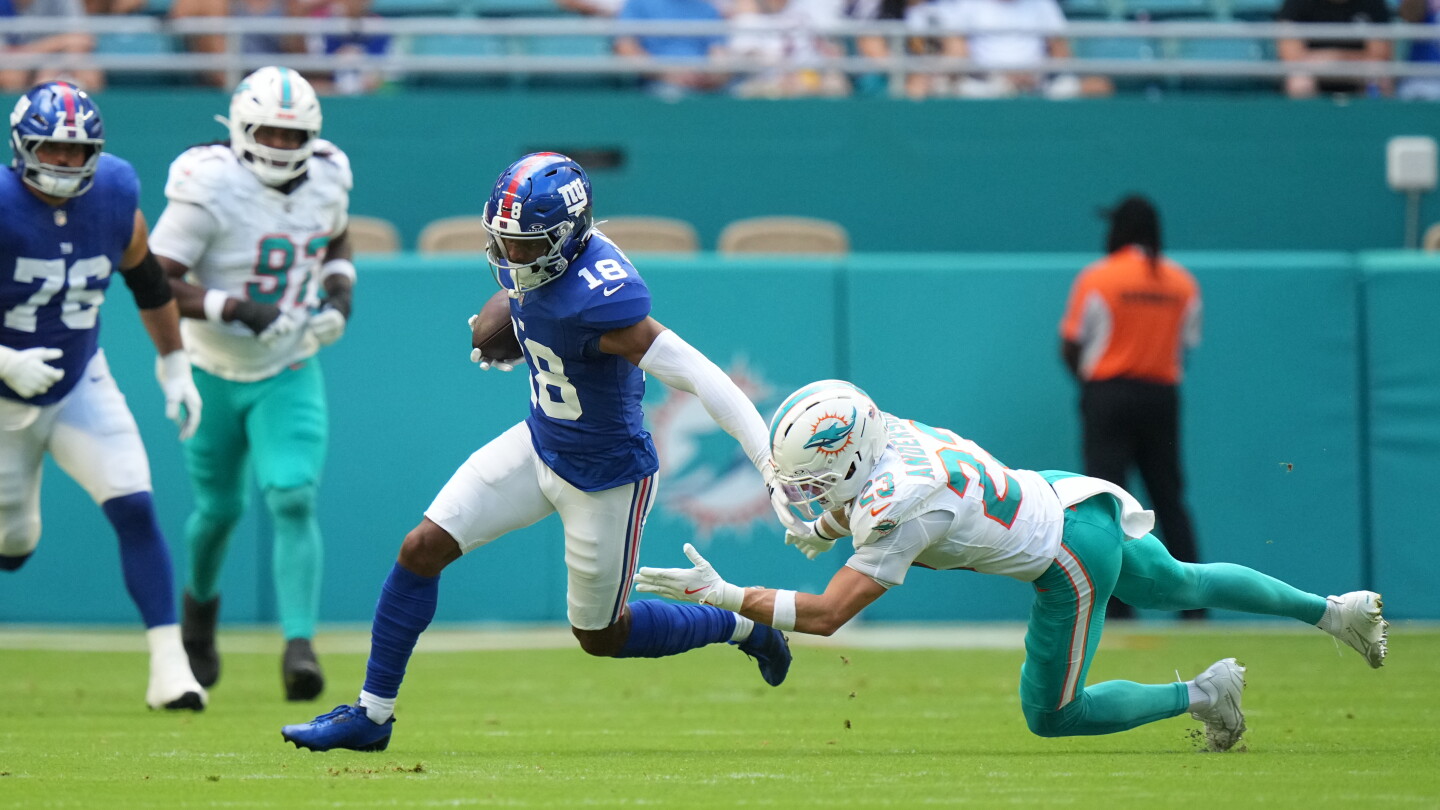
The move eliminates a significant salary cap hit for the franchise, allowing the team to reallocate resources elsewhere.
Slayton was set to earn $13 million for the 2026 season.
This figure represented a substantial portion of the team’s available cap space for a wide receiver.
By parting ways with him, the Giants avoided paying this full amount.
At the time of his release, Slayton was 29 years old. He was in the second year of a three-year contract.
The total value of that agreement was $36 million.
The financial breakdown is straightforward:
- Contract Length: Three years
- Total Value: $36 million
- 2026 Salary: $13 million
- Contract Year: Year 2
The release occurred on September 7, 2026. This timing is critical, as it happened just before the start of the regular season.
The Giants had the opportunity to adjust their roster and salary cap situation before games began.
There is no public information regarding the specific on-field performance metrics or injury history that directly triggered the release.
The available evidence only confirms the financial details and the timing of the transaction.
The team did not provide a detailed explanation for why Slayton was cut, beyond the standard roster move announcement.
The decision leaves the Giants’ wide receiver corps in a state of flux.
However, any speculation about replacements or future signings is not supported by the current evidence.
The focus remains on the immediate financial relief gained by releasing a player with a $13 million salary obligation.
Slayton’s departure marks the end of his tenure with New York.
He had been with the team since being drafted, but the 2026 season will be his first without a Giants jersey.
The $36 million contract is now voided for the remaining years, freeing up cap space for other priorities.
The lack of additional context means the full reasoning behind the cut remains unclear. Was it purely financial? Was it performance-based?
The evidence does not say. What is clear is the monetary impact: $13 million saved in a single season.
This is a significant figure in the NFL, where every dollar counts.
For now, the story is one of numbers and dates. Slayton, 29, is a free agent. The Giants have $13 million more to spend.
The 2026 season is about to begin, and the roster is set. The why remains a question without a definitive answer in the public record.
Slayton’s 2026 Salary‑Cap Impact
Darius Slayton’s departure from the New York Giants carries a specific financial weight for the franchise’s 2026 salary cap.

As the team’s longest-tenured player,
his release Monday was accompanied by an official announcement detailing the immediate cap implications.
The core figure driving this transaction is the $15. 9 million salary-cap hit Slayton was set to incur in 2026.
This amount represents the dead money or cap space adjustment the Giants must account for following his release.
The timing of the move, occurring just days before the season opener, underscores the urgency of managing this financial liability.
Key financial details include:
- Player Status: Released by the New York Giants.
- Tenure: Longest-tenured Giant at the time of release.
- 2026 Cap Hit: $15.9 million.
- Announcement Date: Monday, September 7, 2026.
The $15. 9 million figure is the sole quantified metric provided regarding the cap impact.
No additional details regarding potential savings, remaining contract obligations,
or comparative cap space for other players are confirmed in the available evidence.
The release effectively removes Slayton from the active roster while locking in this specific cap charge for the 2026 season.
This transaction highlights the financial reality of releasing veteran players near the start of the season. The Giants absorbed the $15.
9 million hit to clear Slayton’s roster spot. Without further data on bonus accruals or prorated signing bonuses, the $15.
9 million stands as the definitive cap number for this event.
The team’s decision to proceed despite the substantial hit suggests a strategic shift in roster construction,
though the specific strategic rationale beyond the cap number is not detailed in the source material.
The focus remains strictly on the confirmed financial outcome of the release.
Performance Snapshot: Key Misses and Highlights
The Giants’ effort to keep the game within reach against the Vikings was defined by a critical moment that ultimately stalled their momentum.
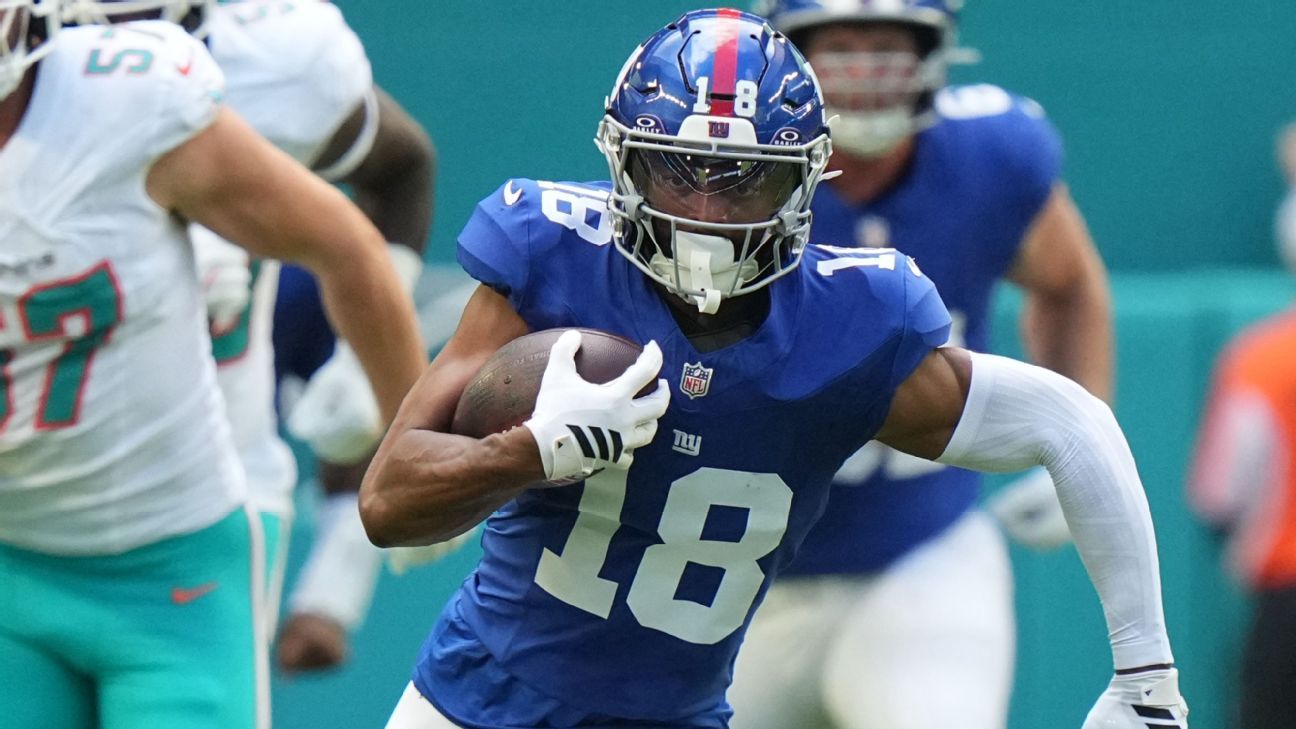
With approximately three minutes remaining in the contest, New York found themselves in a pivotal position near midfield.
The team faced a third-down situation that offered a realistic opportunity to extend their drive and potentially shift the game’s trajectory.
However, the drive ended abruptly due to a key error.
Darius Slayton failed to secure a pass that was described as perfectly thrown by quarterback Daniel Jones.
The drop occurred at a crucial juncture, preventing the Giants from converting the down and continuing their offensive sequence.
This specific play highlighted a significant miss in an otherwise competitive environment where every possession carried substantial weight.
The failure to convert this third-down attempt underscored the challenges the Giants faced in maintaining their comeback attempt.
While the team managed to keep the Vikings’ lead manageable for much of the game,
this particular drop served as a turning point that limited their ability to capitalize on a promising field position.
The incident remains a notable highlight of the game’s final minutes,
illustrating how a single play can impact the outcome of a closely contested match.
No further details regarding Slayton’s overall performance statistics, such as total receptions, yards gained, or other plays,
are provided in the available evidence.
The focus remains strictly on this specific third-down drop and its immediate context within the game’s final stages.
The Giants’ inability to convert this opportunity contributed to their failure to complete a comeback,
leaving the Vikings with a narrow but decisive advantage.
What This Means for the Giants’ Wide‑Receiver Depth
The New York Giants’ wide-receiver corps presented a distinct challenge during the 2022 season, relying heavily on a trio of players who,
while functional, lacked the profile of a traditional elite starter.
The group consisted of Richie James, Darius Slayton, and Isaiah Hodgins.
According to analysis from the NFL playoffs’ divisional round, this combination allowed the team to get by,
but it highlighted a significant ceiling in their receiving options.
A critical assessment of this depth chart notes that none of these three players are considered options worthy of being labeled a No.
1 receiver. This distinction is vital for understanding the Giants’ offensive limitations.
The absence of a clear,
high-tier target forces quarterbacks to distribute the ball more evenly and often rely on other positions or defensive mistakes to generate big plays.
It suggests that while the unit provided adequate coverage and versatility, it did not offer the consistent,
game-breaking threat that defines top-tier NFL offenses.
Physical attributes further illustrate the unconventional nature of this group.
Richie James, for instance, is noted for being undersized, standing at 5-foot-9 and weighing 185 pounds.
This physical profile contrasts sharply with the typical size expectations for a primary wide receiver in the modern NFL,
where height and weight often correlate with red-zone effectiveness and contested-catch ability.
Darius Slayton’s specific physical metrics are mentioned in the same context,
though the detailed comparison is truncated in the available evidence.
The implication remains that the Giants’ receiving corps was defined by its lack of a prototypical, dominant No. 1 option.
Key takeaways regarding the Giants’ receiver depth:
- Core Group: Richie James, Darius Slayton, and Isaiah Hodgins.
- Performance Level: Sufficient to “get by” during the season.
- Limitation: None are viewed as worthy of being a No. 1 receiver.
- Physical Profile: Richie James is undersized at 5-foot-9, 185 pounds.
This assessment underscores a strategic reality for New York:
their success was not driven by a star-caliber wideout but by a collective effort from players who do not fit the traditional mold of a franchise receiver.
The evidence does not confirm specific statistical outputs for Slayton or Hodgins in this context, nor does it detail future roster moves.
It strictly highlights the qualitative gap between having a functional group and possessing a premier, No. 1 talent.
Fan and Analyst Reactions
and Devin Singletary and throwing downfield to Darnell Mooney and Darius Slayton .